
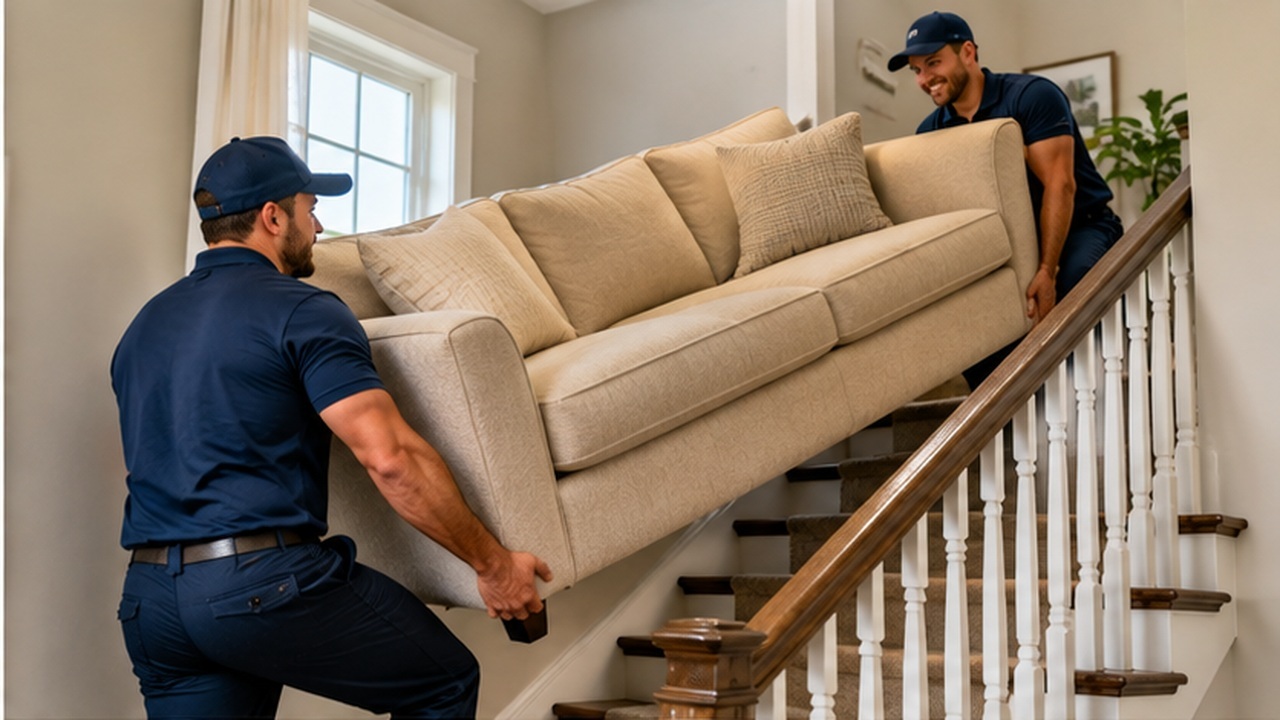
 A spacious living room or oversized primary bedroom can make a home feel like the perfect fit. However, there is one question buyers rarely ask during a showing: Can the furniture they own actually make it into those rooms?
A room may have plenty of space for a king-size bed or sectional sofa, but getting those items through the house can be an entirely different challenge.
Room Size Is Only Part of the Equation
Buyers often measure rooms to determine whether their furniture will fit. While that is important, the dimensions of the room do not tell the whole story.
A large sofa may fit beautifully against a living room wall but be impossible to maneuver through a narrow entryway.
Likewise, a king-size mattress might fit inside an upstairs bedroom but struggle to make it around a tight staircase landing.
The route between the front door and the furniture’s final destination deserves just as much attention as the room itself.
Watch for Tight Turns and Narrow Openings
Some homes have architectural features that make furniture delivery more challenging. Narrow hallways, sharp corners, split-level staircases, and small landings can limit how large items move through the property.
Doorways that appear wide enough may become obstacles when the door itself, surrounding trim, or nearby walls reduce the available clearance.
Buyers should also consider whether large furniture can enter through an alternative doorway, garage entrance, or sliding patio door.
Not every home provides an easy backup route.
Upstairs Bedrooms Deserve Extra Attention
Moving large furniture upstairs presents additional challenges. A staircase may be wide enough for everyday use but difficult for transporting a tall dresser, bed frame, or oversized mattress.
Ceiling height above the stairs can also restrict how furniture can be tilted or rotated.
Buyers who own especially large pieces should measure those items and compare the dimensions with the home’s stairways, landings, and door openings.
Professional movers may have solutions for difficult spaces, but buyers should not assume every item can be accommodated.
Think About Future Purchases Too
Even buyers planning to purchase new furniture should consider delivery access.
Some oversized items arrive in sections, while others are delivered fully assembled. Knowing the available space can help buyers make better purchasing decisions.
During a second showing, consider walking the route a delivery team would take, from the driveway or entrance to each major room.
A home should accommodate more than the furniture arrangement shown in listing photos. Understanding how large items will enter, move through, and eventually leave the property can prevent expensive surprises and make moving day significantly easier.
