
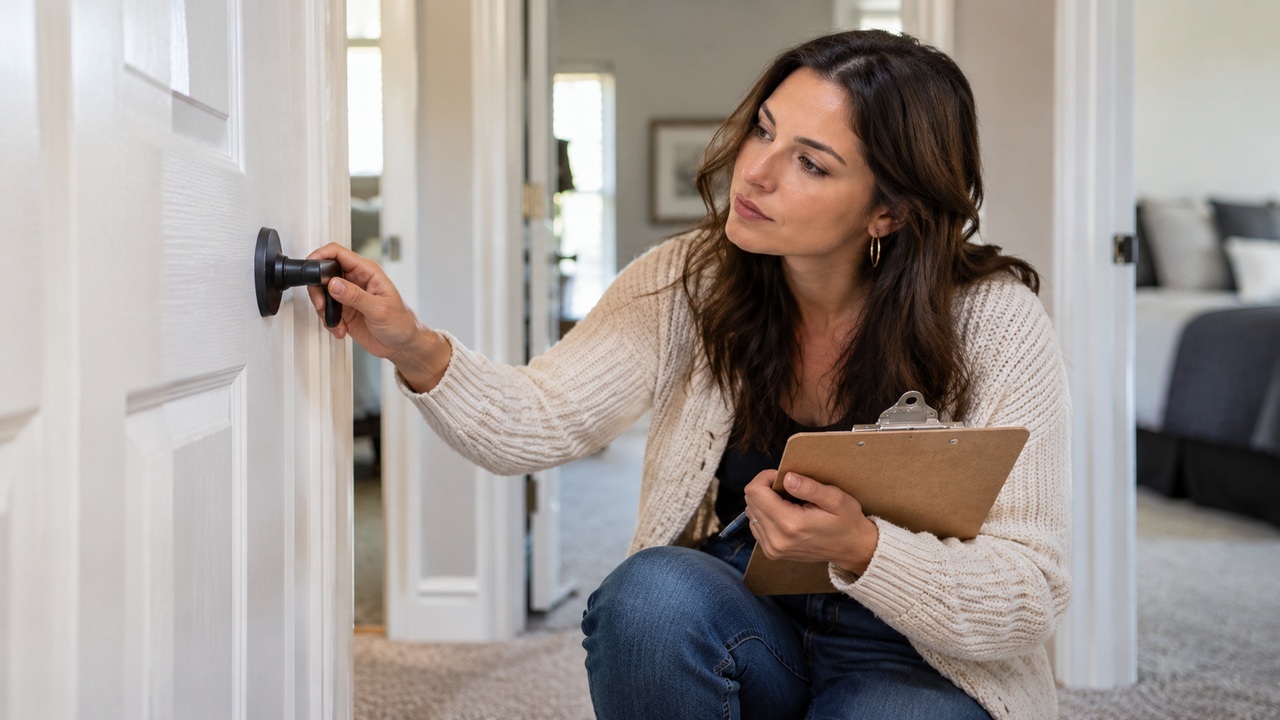
 Fresh paint and attractive furniture can make a house feel move-in ready. Yet one of the simplest checks during a showing is often overlooked: opening and closing the interior doors. Doors can reveal practical issues with room layout, hardware, flooring, and sometimes movement in the building. None of these observations proves a major defect, but they can help buyers ask better questions.
Start With the Everyday Experience
Walk through each room and gently open and close the door. Does it swing freely, or does it scrape the carpet or floor? Does the latch catch without lifting the handle? Can the bathroom door close while someone stands near the sink? Does the bedroom door block a closet or collide with another door? These small details affect daily convenience long after the staging furniture is gone.
A Sticky Door Has Several Possible Causes
A door that rubs its frame may need a hinge adjustment, a latch repair, or trimming after a flooring change. Seasonal humidity can also make wood expand. In other cases, sticking doors may appear alongside wall cracks, uneven floors, or other signs that deserve closer evaluation. Buyers should avoid jumping straight to a foundation diagnosis based on one door. A home inspector can consider the full pattern and recommend further assessment when appropriate.
Look at the Frame and Hardware
Check for loose hinges, missing screws, patched strike plates, or unusually large gaps around the edges. Notice whether a door stays where you leave it or swings open on its own. Look for fresh paint that covers old repairs without explaining them. These clues may point to ordinary maintenance, but they can also show which parts of the house deserve a closer inspection.
Privacy and Accessibility Count Too
A door that opens the wrong way can make a narrow bathroom difficult to use. Heavy doors or awkward knobs may be inconvenient for children, older adults, or anyone with limited hand strength. Think about whether the door arrangement allows furniture to fit and whether bedrooms and bathrooms provide the privacy your household needs. Replacing a door may be simple, but moving an opening can involve a larger project.
Use the Showing as a Starting Point
Make notes about doors that stick, scrape, or fail to latch. Share those observations with your inspector rather than trying to repair or force anything during the tour. Ask the seller about recurring problems or recent adjustments when relevant.
Testing doors takes only a few minutes, but it gives you a more realistic sense of how the house works when no one is posing for listing photos.
